
A longevity goal shouldn’t just be about how long you want to live. It should define what you want to be capable of doing with those extra years—and give you a reason to start working toward them today.
Living to 100 has never been the goal. Being able to do something I love when I get there is.
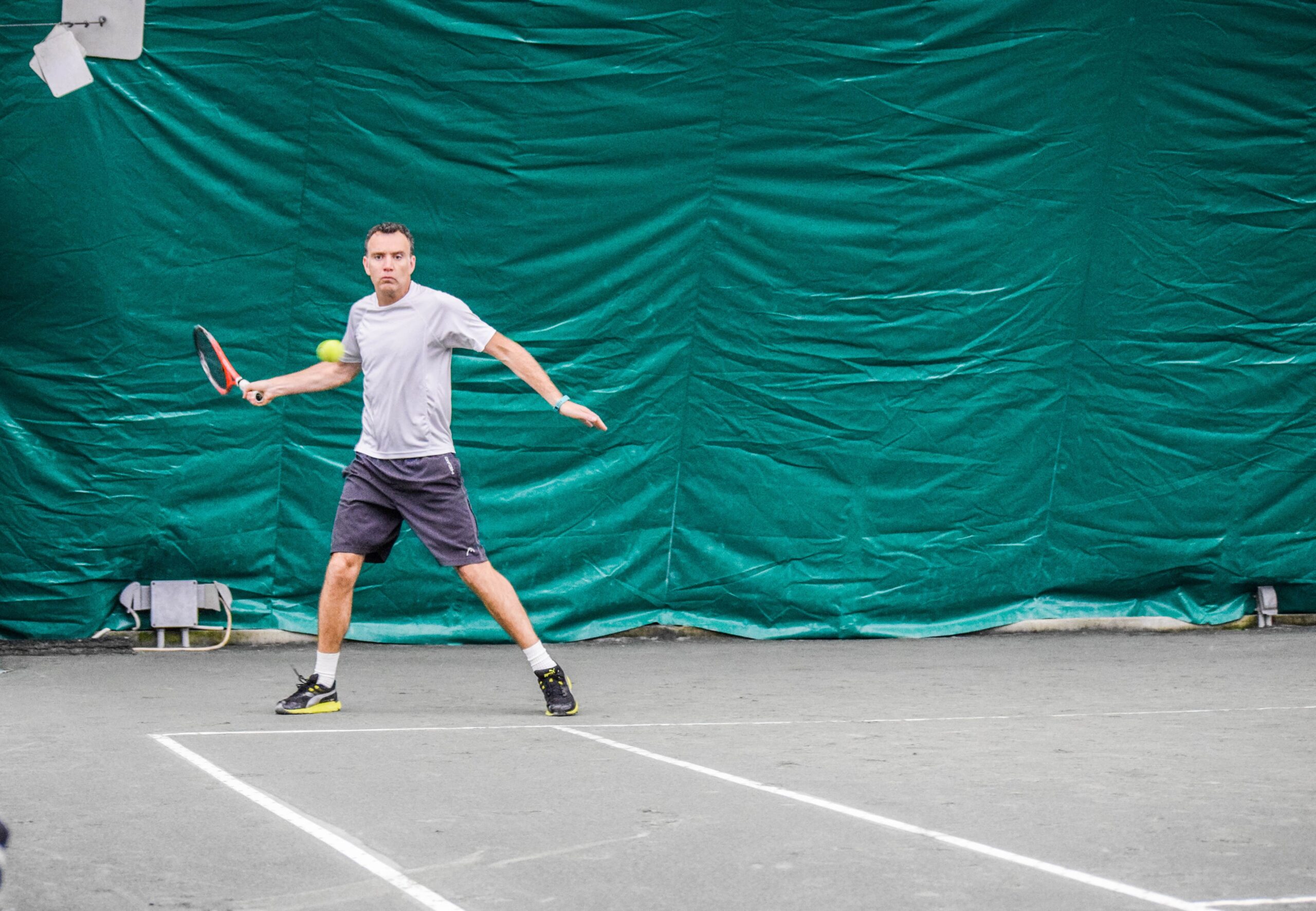
I have a phrase I repeat often enough that people who know me have probably heard it more times than they would like: I want to ski and play tennis on my 100th birthday. It’s become something of a personal mantra. I use it in talks, workshops and conversations about longevity, but perhaps more importantly, I say it to myself.
There’s a reason I’m so specific. I don’t say I simply want to live to 100. Sitting in a chair on my 100th birthday while someone tells me I’ve successfully accumulated a century isn’t particularly motivating. Lifespan alone is just a number. I want to be able to do something, and I’ve deliberately chosen two things I love that require my body and brain to continue functioning at a reasonably high level.
To ski at 100, I’m going to need strength, balance, coordination, cardiovascular fitness, mobility and confidence. Tennis requires many of the same things, together with reaction time and the ability to move quickly in different directions. That’s the point. My 100th birthday isn’t really a longevity goal. It’s a capability goal.
What are you training for?
I’ve run a number of workshops where I’ve asked people about their health and longevity goals. I’m often surprised by how many don’t really have one. They want to “be healthier.” They’d like to lose some weight, improve their biomarkers, have more energy or perhaps live longer. Those are perfectly reasonable ambitions, but I’m not sure they’re always meaningful enough to give our behavior direction.
If someone tells me they want to improve their VO2 max, my next question is: why? If they want to get stronger, why? What are they hoping those improvements will allow them to do?
For some people I’ve worked with, the answer becomes deeply personal. An older dad wants to be there—and to be capable—as his children grow up. Someone else has watched a parent decline from disease and wants to do whatever is reasonably within their control to alter their own trajectory. Another wants to keep hiking, traveling, cycling or carrying grandchildren for as long as possible.
There isn’t a correct longevity goal, and simply choosing one doesn’t mean we’ll live longer. Research does suggest, however, that goal-setting can support behavior change. A systematic review and meta-analysis of randomized trials found a small but meaningful positive effect of goal-setting across a range of behaviors, while other research suggests that monitoring progress can further improve goal attainment.
For me, the more fundamental issue is that without a destination, health can easily become a collection of disconnected activities. We go to the gym because we’re supposed to, take supplements because someone recommended them, and monitor an ever-growing collection of biomarkers. But what is all of it for?
I chose something I love
I didn’t choose skiing and tennis because a longevity researcher told me they were the optimal activities for centenarians. I chose them because I love doing them. If I’m lucky enough to reach 100 but have spent the preceding decades optimizing my life around activities I don’t enjoy, I’m not entirely sure I’ve understood the assignment.
For me, healthspan is about preserving the ability to participate in life. Skiing and tennis happen to be two of the ways I participate, but they also give me a useful test. If I genuinely want to ski at 100, I can’t start preparing at 97. The capabilities I’ll need then are being influenced by what I do decades earlier.
That changes the way I think about training today. I’m not simply exercising to look better this summer. I’m trying to preserve muscle because I’ll need strength later. I’m working on cardiovascular fitness because I want an engine capable of carrying me through my later decades. Mobility and balance aren’t optional extras because they’re prerequisites for the activities I’m claiming I want to do.
The goal reaches backwards from the future and begins influencing decisions today.
[Cross-reference: The Six Foundations of Longevity]
This is a natural place to link the movement section of your Six Pillars article, perhaps through: “I’ve written more about why I divide movement into strength, cardiovascular intensity, walking, and mobility and balance.”
What I tell my body
There’s another part of this that is harder to measure scientifically but remains important to me. I believe strongly in the connection between mind and body, and every time I say, “I’m going to ski and play tennis on my 100th birthday,” I’m making a statement about what I expect from myself and what I hope my body will remain capable of doing.
I sometimes think of it almost as giving my cells an instruction: I’m going to need you. I don’t mean that literally. I don’t have evidence that saying those words commands my stem cells to regenerate, persuades my mitochondria to postpone aging or somehow overrides the biology of getting older. Positive thinking isn’t a medical intervention.
What interests me is the relationship between expectation and behavior. Longitudinal research has found that older adults with more positive perceptions of their own aging subsequently reported better functional health, while other work has identified physical activity as one potential behavioral pathway connecting perceptions of aging with health. These studies don’t establish that positive thinking directly changes our biology, but they make the relationship between expectations, behavior and aging worth taking seriously.
If I’ve already decided that physical decline is inevitable—that at 70 I’ll slow down, at 80 I’ll stop doing certain things and at 90 I’ll simply be grateful to be here—I wonder how many small decisions I might make along the way that reinforce that expectation. My expectation is different. I expect my body to work for as long as possible, and because I expect that, I have an obligation to give it the best chance I reasonably can.
Perhaps “mind over body” isn’t the right description. Mind with body is closer to what I mean. I can tell myself I’m going to ski at 100 every morning, but if I spend the next 40 years sitting on the sofa, the mantra isn’t going to help much. I still have to do the work.
My dad gave me a glimpse of what that looks like
My dad is 84, and he still plays tennis three times a week.
This summer, in 2026, I had the pleasure of playing with him and my son, Dash. Three generations of our family were on the same tennis court, and there was something about that moment that captured much more of what I mean by longevity than almost any biological-age score could.
My dad was moving and competing. He had a reason to show up. He was spending time with his son while encouraging his grandson to play a sport that has been part of his own life for decades. Tennis was doing more than exercising his cardiovascular system or helping him maintain physical capacity. It was creating connection, reinforcing identity and giving three generations of us something we could do together.
There’s an increasingly interesting body of evidence around this broader idea. A 2026 meta-analysis combined data from 25 samples involving nearly 489,000 people and found that greater purpose in life was consistently associated with lower risk of earlier mortality. Some of that association was explained by behavioral, clinical and psychological factors, and observational evidence cannot establish that purpose itself causes a longer life. But the consistency of the relationship across populations is difficult to dismiss.
When I think about my dad playing tennis at 84, I don’t just see exercise. I see movement, community, purpose and identity interacting with one another. And I see something that’s harder to put into a biomarker: a memory that my dad, my son and I now share.
If I’m fortunate enough to be playing tennis at 84, I hope I’m not doing it alone. I hope Dash is on the other side of the net. Perhaps there will be another generation there too. Suddenly the goal isn’t simply about staying fit. It’s about staying in the game.
[Cross-reference: Community Is a Longevity Technology]
I’d make “movement, community, purpose and identity interacting with one another” the natural bridge to that piece rather than adding a separate promotional sentence.
Information isn’t motivation
One of the biggest lessons I’ve taken from years of working around behavior change is that knowing what is good for us doesn’t necessarily mean we’ll do it. We know exercise matters. We know sleep matters. We know smoking is harmful. Information is important, but information alone frequently doesn’t change behavior.
A meaningful healthspan goal changes that conversation for me because it connects today’s inconvenient behavior with tomorrow’s desired life. “Strength training supports healthy aging” is useful information. “I want to be strong enough to pick up my granddaughter when I’m 85” gives it personal meaning. “Cardiovascular fitness matters” is information. “I want to hike in the Dolomites with my children when I’m 75” gives it a destination.
The science helps tell us what matters. A personal goal gives us a reason to care enough to keep doing it.
Your goal doesn’t need to be 100
I don’t think everyone needs my goal. In fact, I’d rather they didn’t copy it. The point isn’t to choose 100 because I’ve chosen 100, or tennis because my dad and I play tennis. The point is to find something sufficiently meaningful that it gives your health a direction.
Perhaps you want to be the grandparent who gets down on the floor and can still get back up. Maybe there’s a mountain you want to climb at 70 or a country you want to explore at 80. Your motivation might come from the other direction: perhaps you’ve watched a parent lose independence through cardiovascular disease, diabetes, dementia or frailty and want to do whatever is reasonably within your control to reduce your own risks.
A goal doesn’t need to be grand or public. It needs to matter enough that it influences what you do today. For me, the most useful healthspan goals combine meaning and capability: they’re emotionally important enough to motivate us and specific enough to demand something from us physically, cognitively or socially.
“Be healthy” doesn’t tell me very much. “Still be able to ski with my family at 85” does. Once I know the destination, I can start asking what that future version of me will need from the person I am today.
Goals give the six pillars a reason
This is why a longevity goal sits naturally alongside my Six Pillars of Longevity: nutrition, movement, sleep, stress, toxins and harmful exposures, and community and purpose. The pillars describe much of the work. The goal explains why I’m doing it.
Nutrition helps give my body what it needs. Movement helps preserve the strength, cardiovascular fitness, mobility and balance I’ll need later. Sleep and stress management support recovery. Reducing unnecessary harmful exposures is part of protecting the system. Community and purpose help give me reasons to remain engaged with life.
As I move through my 50s and beyond, I can add another layer: measure what’s changing, correct problems where appropriate and intelligently explore whether medicine or emerging longevity technologies can help preserve capabilities that lifestyle alone may not fully protect. That’s the framework I increasingly use for myself: Build. Measure. Correct. Optimize.
But even that framework needs a destination. Otherwise longevity itself risks becoming the hobby—more measurements, more interventions, more optimization—rather than a means of preserving the life we actually want to live.
My 100th birthday gives all that work somewhere to go.
[Cross-reference: The Six Foundations of Longevity]
This should be the article’s strongest internal link. I’d hyperlink “Six Pillars of Longevity” directly rather than inserting a “read more” sentence.
[Cross-reference: Body as a Battery]
The Build → Measure → Correct → Optimize paragraph could also carry a secondary link to your broader Body as a Battery / Human Energy framework, particularly once that anchor piece is published.
Don’t just add years. Decide what they’re for.
The longevity industry spends an enormous amount of time asking how long humans might eventually live. It’s an interesting scientific question, but I’m increasingly more interested in a personal one: what do you want to be able to do with the years you’re trying to gain?
My answer happens to be skiing and tennis. Maybe I make it to 100 and maybe I don’t. Perhaps despite doing many things right, biology has other plans. A healthspan goal isn’t a guarantee, and I don’t believe enough discipline or positive thinking gives any of us complete control over aging.
Goals aren’t valuable because they guarantee the destination. They’re valuable because they give us a direction.
My dad is 84 and still walking onto a tennis court three times a week. This summer, three generations of our family got to walk onto one together. That’s the kind of longevity I understand, because the extra years aren’t simply being counted. They’re being used.
So I’ll keep saying it—to audiences, to my family and, most importantly, to myself: I’m going to ski and play tennis on my 100th birthday. Not because saying it will make it happen, but because saying it reminds me what I’m working toward.
And then I have to do the work.
Sources & further reading
Epton, Currie & Armitage (2017), Journal of Consulting and Clinical Psychology. A systematic review and meta-analysis of 141 papers and more than 16,000 participants found a small positive independent effect of goal-setting on behavior change.
Levy, Slade & Kasl (2002), The Journals of Gerontology. An 18-year longitudinal study found that more positive self-perceptions of aging were associated with better subsequent functional health among adults 50 and older.
Sutin et al. (2026), Psychological Medicine. Meta-analysis of 25 samples comprising 488,765 participants found a consistent association between greater purpose in life and lower risk of earlier mortality.
This article reflects my personal experience and interpretation of published research. It is intended for general information and is not medical advice.


One Response