
News Flash: It’s My Birthday
Last night was my daughter Lola’s 16th birthday party.
The theme, selected after what appeared to be several hundred hours of Pinterest research, was NEWS FLASH: IT’S MY BIRTHDAY.
And if you have never watched a sixteen-year-old girl prepare for a birthday party in the age of Pinterest, you may underestimate the production values now expected of what, in my childhood, involved a cake, some balloons and perhaps a traumatically bad game of musical chairs.
This was not that.
Lola had spent days planning every detail. Photos. Signs. Lighting. Balloons. Table settings. A very specific aesthetic that I was permitted to help execute but absolutely not permitted to interpret.
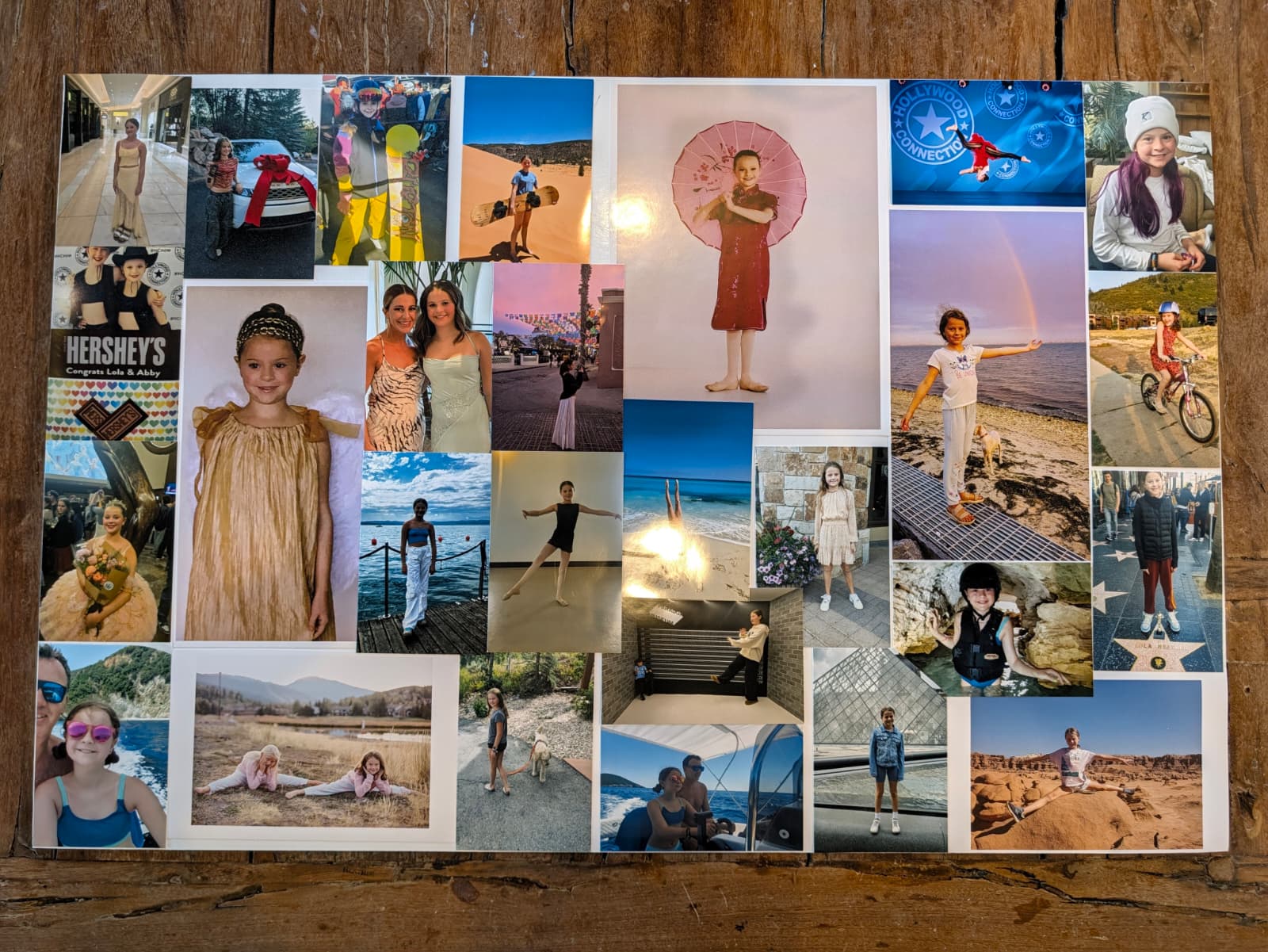
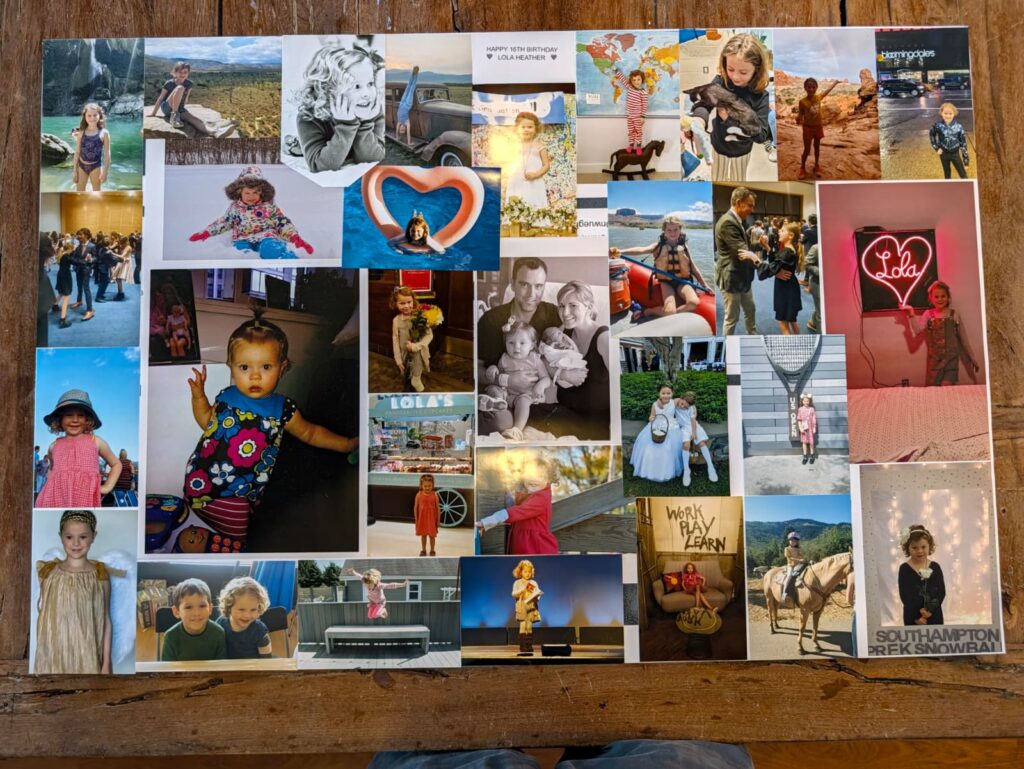
I spent a few hours with her finishing everything off and, as a surprise, made several huge boards of photographs from the last sixteen years.
Baby Lola.
Toddler Lola.
Dancer Lola.
School Lola.
Sisters.
Family.
Friends.
Stages.
Holidays.
Sixteen years compressed onto pieces of foam board.
I hadn’t expected making them to affect me quite as much as it did. There is something deeply unfair about looking at hundreds of photographs of your child growing up in the space of an hour. Real life gives you sixteen years to process it. Apple Photos gives you forty-five minutes.
There she was at three.
Then six.
Then ten.
Then suddenly sixteen.
I found myself tearing up while sticking photographs onto boards, enormously excited for the night ahead but also confronted by that peculiar parental truth: the days can sometimes feel very long, while the years seem almost offensively short.
The plan for the evening was simple.
First, dinner with her five closest girlfriends. Then back to our house for a larger party of about twenty-five.
Strictly invite only.
And three rules:
No alcohol.
Respect the house and each other.
Have fun.
Pretty reasonable, I thought.
The five girls appeared dressed in black, looking impossibly grown-up and extremely cute, then disappeared off to dinner in a cloud of perfume, laughter and teenage energy.
An hour or so later they returned.
Lights on.
Music on.
Game on.
The boys were allowed too, although only a handful. They had to be kids who had been to the house before and whose parents we knew.
We were trying to thread that increasingly difficult parental needle: give them freedom, but not too much freedom. Be present, but not too present. Trust them, while simultaneously locking every bottle of alcohol in the house somewhere roughly equivalent to Fort Knox.
My assigned position was upstairs.
Close enough to intervene.
Far enough away that nobody had to dance while someone’s dad watched them.
At nine o’clock the knocks on the door became louder and more frequent.
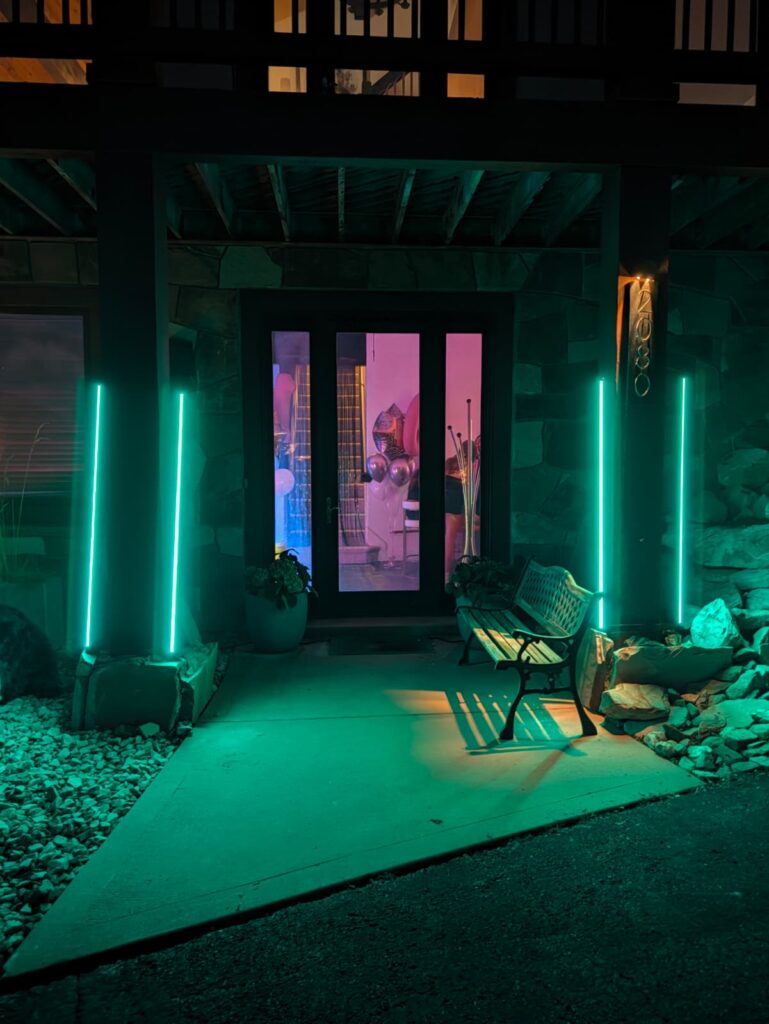
At one point I looked outside and saw Lola standing on a bench addressing the arriving crowd.
She announced the rules.
No alcohol. Respect the house. Respect each other. Have fun.
And then marched them downstairs.
I smiled.
I was proud of her.
Here was this little girl whose photographs I had spent the afternoon assembling, now standing on a bench confidently commanding a group of teenagers.
Admittedly, she has been performing on stages since she was about three, so perhaps addressing twenty-five hormonal sixteen-year-olds wasn’t particularly intimidating.
For the next hour I largely stayed out of the way.
The music grew louder.
So did the voices.
Every now and then, underneath the bass, I could hear the distinctive rattle of the large spinning wheel they had set up downstairs.
I had made the mistake earlier of inspecting some of its options.
Kiss a girl.
Switch clothes.
And various other instructions I decided, as a father, were best left unexplored.
There are moments in parenting when curiosity is important.
There are others when ignorance is a highly evolved survival mechanism.
From what I could tell, it was mostly innocent teenage fun: young people testing boundaries, flirting, laughing, performing for each other and, inevitably, creating sufficient Snapchat content to keep several data centres running through the night.
Then I heard Lola shouting.
Really shouting.
There was swearing.
My paternal radar immediately activated.
I sat there for a moment.
This is one of those strange decisions nobody prepares you for.
Do I go downstairs?
Does she need me?
Or does going downstairs communicate that I don’t believe she can handle this herself?
I waited.
The voices continued.
Then subsided.
No scream for Dad.
No stampede upstairs.
No broken glass.
I stayed put.
The next morning I discovered that a group of girls who hadn’t been invited—and hadn’t even dressed for the party—had tried to crash it.
Lola had confronted them and got them to leave.
By herself.
I smiled when I heard that.
Because perhaps one of the hardest parts of parenting teenagers is recognising the moments when your child doesn’t need you to rescue them anymore.
Sometimes being a good father means running downstairs.
Sometimes it means staying upstairs.
Unfortunately, the evening wasn’t quite finished teaching me that lesson.
At around eleven I heard another commotion.
This time I went downstairs.
Several more uninvited kids had arrived at the door. Lola was explaining, increasingly firmly, that this was a private party and they weren’t coming in.
These particular boys already had something of a reputation locally for causing trouble. Their parents live elsewhere and they apparently have considerably more freedom than most teenagers.
Freedom can be wonderful.
Unlimited freedom at sixteen is perhaps a more debatable proposition.
I stepped in, ushered them away from the house and watched them leave.
Problem solved.
Excellent parenting.
Party saved.
I mentally awarded myself a small medal.
Ten minutes later, the police arrived.
Apparently, after leaving our house, one of the boys had thrown a beer bottle at a passing car.
Someone called the police.
And so, less than a year after our now somewhat infamous Halloween party, Park City’s finest once again found themselves standing at our front door.
At this point I imagine there is possibly a small file somewhere at the police station entitled:
THE HEATHERS: AN ONGOING PARENTING EXPERIMENT.
And standing there, talking to the police, something strange happened.
I had been here before.
Not in Park City.
Not as the father.
As the sixteen-year-old.
Thirty-Five Years Earlier
I grew up moving between homes and countries, and I never really felt like the cool kid.
By the time we lived outside Bunbury, we were far enough from town that casually having friends over wasn’t particularly casual. You couldn’t exactly wander home afterwards.
So once a year or so, my parents allowed me to throw a party.
We had an attic floor at the top of the house. The ceilings were barely high enough for an adult to stand comfortably, but apparently perfectly proportioned for a hundred teenagers.
I think we only had three of these parties.
But there is one scene I still remember vividly.
My mother was kneeling at the bottom of the narrow staircase leading up to the third floor, scrubbing the carpet.
I don’t remember what had happened.
A spilt drink.
A spiked drink.
Vomit.
At a teenage party, probably best not to conduct the forensic analysis.
What I do remember is Mum.
On her knees.
Scrubbing.
She wasn’t screaming.
She wasn’t storming upstairs threatening to shut the party down.
She wasn’t giving me a lecture about respect or responsibility.
She had simply encountered a disgusting mess and responded with the extraordinary practicality of a Yorkshirewoman presented with a dirty carpet.
Get a bucket.
Get a scrubbing brush.
Sort it out.
I remember looking at her with something approaching awe.
And then I saw him.
Out of the corner of my eye, a boy came charging down the staircase.
Straight towards Mum.
And the bucket.
Time slowed.
I shouted.
I think I may even have made some heroic attempt to dive towards the impending disaster.
Too late.
Boy met bucket.
Bucket met carpet.
And whatever foul cocktail of soap, water and teenage bodily fluids my mother had so diligently collected was redistributed spectacularly across the main floor.
Mum looked at me.
Then at the carpet.
Then, I seem to remember, back at me.
There are certain looks only mothers possess.
No words required.
Then she got back down on her knees and started cleaning again.
I should have knelt beside her.
That was clearly the right thing to do.
I’m almost certain I didn’t.
I probably ran back upstairs to find out what fresh chaos was unfolding.
Sorry, Mum.
Note to future self: if I am ever lucky enough to have children of my own, install wooden floors.
Eventually the police arrived at that party too.
Some local boys from the village who hadn’t been invited had gatecrashed.
My father—an intimidating six-foot-three—was downstairs telling them, in terms that presumably required little clarification, that it was time to leave.
I have a distant memory of him getting into his car and driving them off the property.
That was about thirty-five years ago.
And last night, suddenly, there I was.
The father.
Standing downstairs.
Removing the uninvited boys.
Talking to the police.
Protecting my daughter’s party.
Trying to give her just enough freedom to discover herself while standing close enough to catch things if they went badly wrong.
Thirty-five years to travel from the top of the stairs to the bottom.
Perhaps that is one of life’s strangest tricks.
As children, we mostly experience our parents as obstacles to whatever it is we desperately want to be doing.
They’re too cautious.
Too strict.
Too embarrassing.
They don’t understand.
And then, slowly, almost imperceptibly, life moves you around the board.
You become the parent.
You find yourself standing in precisely the place they once stood, confronting essentially the same chaos with a different soundtrack and better technology.
And suddenly you understand them.
Last night I understood my mother on her knees with that scrubbing brush in a way sixteen-year-old me never could.
I understood why she didn’t scream.
She wasn’t surrendering.
She was parenting.
She knew teenagers were going to make mistakes. She knew a party with a hundred of them wasn’t going to unfold according to some carefully controlled adult plan.
So she cleaned the carpet.
And let me have my night.
I understand now what a gift that was.
And I understood my father too.
He wasn’t trying to ruin my party by throwing people out.
He was protecting it.
Protecting me.
Giving me enough freedom to have the experience while quietly standing guard around its edges.
Exactly what I found myself doing for Lola thirty-five years later.
I wish I could go back and tell them that I noticed.
Perhaps not then.
But I notice now.
The irony of our own evening was still painful.
We had locked away the alcohol.
We had explicitly told every kid there was no drinking.
Lola had repeated the rules approximately fourteen times.
I had personally removed the uninvited kids.
We had tried to do everything responsible parents are supposed to do.
And yet there I was, once again, explaining teenage partying to a police officer while standing in a house decorated with balloons and sixteen years of photographs of my daughter being adorable.
Parenting is nothing if not humbling.
The police were understandably unimpressed by the broader situation.
And here’s the difficult reality.
You can ban alcohol.
You can lock yours away.
You can tell every kid and every parent the rules.
But teenagers are ingenious little smugglers.
They leave things in cars. They go backwards and forwards. A Coke can may contain Coke. It may contain Coke with vodka. A can that appears to be sparkling water may turn out to be something entirely different.
At sixteen, rules are sometimes regarded less as boundaries and more as interesting engineering challenges.
The party was over.
Parents were called.
Kids began filing upstairs.
Nobody was allowed to drive home unless they were prepared to take a breathalyser.
Curiously, there were not many volunteers.
My seventeen-year-old daughter assures me there is always a designated driver in her group.
I choose to believe her.
This is another essential parenting skill.
By midnight, our beautifully designed Pinterest party had transformed into a teenage evacuation exercise.
And Lola was devastated.
Not because she had been caught doing something wrong.
Quite the opposite.
She had wanted desperately to prove to us that she could do this.
That she could have friends over.
That they could have a great party.
That she could be trusted.
That her friends could be trusted.
That sixteen didn’t have to mean chaos.
And mostly, she had proved exactly that.
The people who caused the problem weren’t even invited.
Watching her cry hurt.
Because as a parent your instinct is to fix things.
But there was nothing to fix.
Life had simply happened.
After everyone had gone home safely, we cleaned up.
And, in fairness, it was a remarkably normal clean-up.
Cups.
Food.
Decorations.
The usual debris of twenty teenagers having fun.
Compared with last year’s Halloween party—which involved replacing the pool-table cover and patching actual holes in walls—this felt positively civilised.
Progress.
And thankfully, wooden floors.
Mum, eventually I learned.
By the time I finally went to bed, I found myself thinking about those photographs again.
The little girl on the boards downstairs.
Three years old.
Five.
Eight.
Twelve.
Fifteen.
And now sixteen.
For most of those years, parenting had largely been about control.
Hold my hand crossing the road.
Wear your helmet.
Be home at this time.
Don’t touch that.
Do your homework.
Eat your vegetables.
Get some sleep.
But somewhere around sixteen, the job description changes.
You still make the rules.
You still create the safest environment you can.
You still lock away the alcohol and know the parents and stand upstairs listening for changes in the tone of voices below.
But control?
Control is increasingly an illusion.
Your children are entering a world that belongs to them.
They will make decisions you agree with.
They will make decisions you don’t.
Their friends will make decisions neither you nor they can control.
Other people will occasionally throw beer bottles at passing cars ten minutes after you’ve removed them from your property.
Apparently this is also parenting.
The job becomes less about controlling every outcome and more about giving them enough judgement, confidence and self-respect to navigate what happens when the outcome isn’t what they planned.
And on that measure, Lola did brilliantly.
She planned something beautiful.
She brought together the people she cared about.
She communicated the rules.
She stood up to people who weren’t respecting them.
She handled the first confrontation without needing Dad.
She accepted help when things moved beyond what she could reasonably manage.
And when everything went sideways, she cared deeply.
I was proud of her.
Perhaps even more proud than I would have been had the whole evening gone perfectly.
Because perfect evenings don’t teach you very much.
The messy ones do.
This morning, the house was quiet again.
The music was gone.
The lights were off.
The spinning wheel had mercifully stopped spinning.
And scattered around downstairs were those photographs of Lola growing up.
Yesterday afternoon they had made me emotional because they reminded me how quickly sixteen years had passed.
This morning they meant something slightly different.
Because somewhere amongst the police, the gatecrashers, the tears, the laughter and the mess, I realised that another transition had quietly taken place.
Lola is growing up.
And so, apparently, am I.
Thirty-five years ago, I was the teenager upstairs while my parents stood guard below.
Last night, I became them.
Maybe one day Lola will be standing in her own house, listening to music thumping from another floor, wondering whether to intervene or stay put.
Perhaps there will be an uninvited kid at the door.
Perhaps there will be a police officer standing outside.
And perhaps, just for a second, she’ll think of me.
She may finally understand that I wasn’t trying to control her.
I was trying to give her enough freedom to become herself, while staying close enough to catch her if she fell.
Just as my parents did for me.
Sometimes being a father means running downstairs.
Sometimes it means staying upstairs.
And sometimes it means recognising that the little girl whose baby photographs you were sticking onto boards only a few hours earlier doesn’t need you in quite the same way anymore.
That part hurts a little.
But it is also exactly what is supposed to happen.
Happy 16th, Lola.
You did good.
Dad is very proud of you.
And one final news flash.
I love you.