
What caring for our Goldendoodle through cancer taught me about lifespan, healthspan and hope
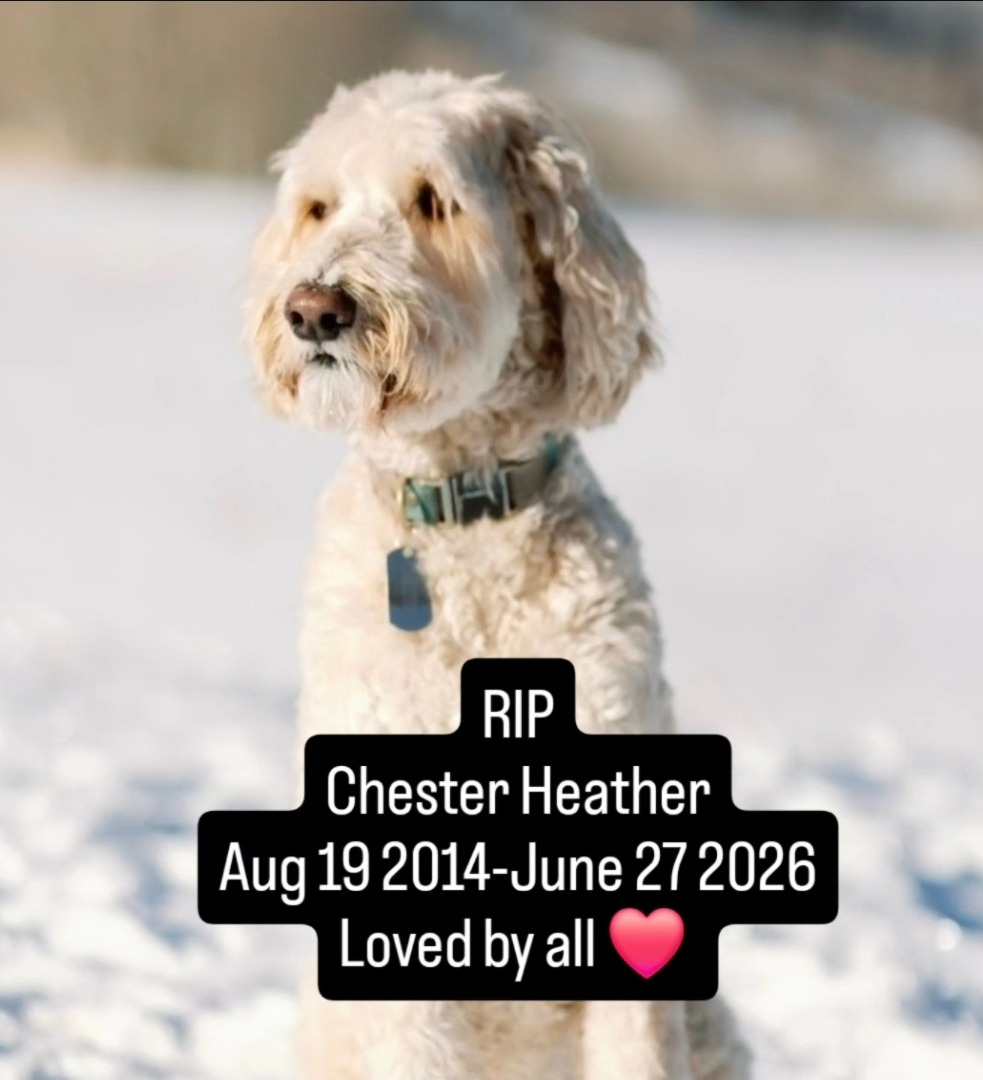
Chester passed away on 27 June 2026. He was doing remarkably well until his final two days, followed by a rapid decline and a swift goodbye. Losing him was painful, but there was comfort in knowing that most of his remaining life had been good, rather than defined by a long period of deterioration. For someone who spends a considerable amount of time thinking about longevity, that distinction became deeply personal.
My own ambition is to ski and play tennis on my hundredth birthday, which should at least give my children something entertaining to organise. Much of my work centres on how we preserve our energy and remain capable of enjoying the years ahead. Chester brought those questions into our home with an urgency that no longevity conference could quite match. What could Diana and I do to help him? How would we know whether it was helping? And how could we make sure our desire for more time was serving him?
The prognosis
Chester was twelve, a Goldendoodle weighing around fifty-five pounds, when a persistent dry cough became increasingly concerning. It had worsened over several months, and in November 2025 imaging revealed extensive changes in his lungs consistent with advanced cancer. Our vet, Tyler Stiens at Silver Creek Animal Clinic, gave us an initial prognosis of approximately three months.
There is something brutally efficient about a number like that. Twelve years of life together are suddenly placed beside a very small amount of time remaining. You begin thinking about what might be his last Christmas, what you should pay more attention to, and whether there is anything useful you have overlooked. Diana and I began looking at how we could support him through whatever came next.
Bringing healthspan home
Healthspan is the portion of life in which we retain the health and ability to enjoy living. Chester made me think more carefully about what that means for our animals. A dog cannot describe his goals or tell you that a treatment feels like a worthwhile trade-off. You have to pay attention to appetite, movement, breathing, behaviour and the small changes that suggest how he is feeling.
Our aim became to preserve his comfort and everyday quality of life for as long as possible. We wanted more time, of course, but the quality of that time had to remain central. That led us towards a combination of food changes, prescribed medication and additional supportive measures. I later documented what we were doing for veterinary review. Looking back, that document also captures something less clinical: two people trying to turn their concern into useful action.
Starting with his food
One of the most substantial changes was moving Chester from kibble to meals prepared with whole foods. We rotated proteins including salmon, white fish, ground beef and boiled chicken, alongside vegetables such as broccoli, cauliflower, carrots and a little unsweetened pumpkin. Eggs were included several times a week, and broth helped make the meals moist. Preparing his food gave us something tangible to do, and his appetite became one of the things we watched closely.
There is an important distinction between describing our choices and recommending them. A bowl of meat and vegetables can look wonderfully wholesome without providing everything a dog needs. Cornell’s veterinary guidance emphasises that dogs with cancer need sufficient calories and complete, balanced nutrition, and that homemade diets should be formulated with expert guidance. Our original notes included questions about nutritional completeness, including calcium and other additions. Love is a powerful reason to cook for your dog, but it does not automatically qualify you to formulate his diet.
Trying to help under uncertainty
Alongside the food changes, Chester received prednisone prescribed by his vet. We also used a range of supplements and supportive products, including omega-3 fish oil, fibre sources, slippery elm, a multivitamin, probiotics and products marketed for immune support, including beta-glucan and turkey tail mushroom. Our thinking centred on supporting nutrition, managing inflammation and exploring whether we could help his immune function. Those were our intentions; they should not be confused with demonstrated effects in Chester.
We also tried experimental adjuncts, including ivermectin and fenbendazole. I want to include that honestly because it was part of our experience, while being equally clear about the uncertainty. Our treatment record classified these as experimental, with limited evidence and a need for veterinary review. Published research into pet owners’ use of fenbendazole has likewise acknowledged that its benefit in companion animals with cancer has yet to be established. This account deliberately leaves out doses and shopping links; our decisions should not become a treatment template for someone else’s dog.
When an animal you love is seriously ill, hope makes you receptive to possibilities you might otherwise approach more cautiously. An encouraging laboratory finding, an online story and a demonstrated benefit in a dog are different things. I wanted to remain open to possibilities while recognising that my desire to help could make weak evidence feel stronger than it was.
What the follow up scans showed
In March 2026, Chester had follow-up imaging. According to the record we prepared in April, comparison with his November scans suggested that progression had been slower than initially feared. The prognosis discussed at that point was six to twelve months. That gave us a different outlook from the one we had been given in November, although it remained an estimate rather than a promise.
Alongside the scans, our notes recorded that Chester had maintained his appetite, with some variability, and preserved functional quality of life. We watched his cough and breathing, energy, behaviour and how well he tolerated what we were giving him. These observations mattered to us enormously. They also have limits: we changed several things at once, there was no comparison group, and a prognosis is inherently uncertain. We cannot know from Chester’s experience whether a particular supplement, medication or dietary change altered the course of his disease. We can share what we did and what we observed without claiming that we proved a treatment worked.
More time and good time
After that initial prognosis in November, Chester remained with us for roughly seven more months. He was doing well for almost all of them, until the final two days before his death on 27 June. We cannot know how much our approach contributed to that outcome, but we can describe the outcome itself: more time together than we initially expected, with his quality of life preserved until very close to the end.
Lifespan tells us how long Chester lived. Healthspan asks how much of that time he was able to enjoy. In human longevity, we hope to remain capable, engaged and comfortable for as much of our lives as possible, with a shorter period of decline at the end. Chester’s experience brought that ambition home. The value was in the ordinary days we continued to share with him.
Caring for him also exposed a difficult part of loving an animal. We are responsible for interpreting his needs while carrying our own attachment, fear and hope. Wanting him to stay is natural. Making decisions on his behalf requires us to keep asking whether those decisions are helping him. I suspect most people who have cared for a seriously ill pet would recognise that tension immediately.
Could his experience help other dogs
Our vet has since been looking at the protocol we put together and considering how it might help other dogs. I am pleased that Chester’s experience may prompt further questions and potentially inform care beyond our own family.
That remains an exploration. Veterinary interest does not establish that the protocol works, and Chester’s experience cannot tell us which components were useful, which made no difference, or what would be appropriate for another animal. But documenting what we did, alongside the scans and observations about his daily life, gives a veterinary professional something concrete to examine. That feels like a worthwhile next step: take an encouraging individual experience, scrutinise it carefully and see what can responsibly be learned.
What Chester left us with
Chester’s illness gave Diana and me a practical education in care under uncertainty. We prepared food, watched his appetite and breathing, explored options and tried to make decisions that served him. Alongside all of that, we had to remember to enjoy being with him. It is surprisingly easy, when you are trying to preserve a life, to become so occupied with the next intervention that you lose sight of the life still happening in front of you.
His experience is one reason I want to explore pet healthspan more deeply. We devote increasing attention to helping people live longer and better, and many of us feel just as strongly about giving our animals healthy, comfortable lives. There is room for better evidence, clearer guidance and more thoughtful conversations about what worthwhile care looks like.
I wish Chester were still here. I am grateful for the time we had, and for how well he was able to live through most of it. If his experience eventually helps another family give their dog more comfortable, enjoyable time, that would be a lovely part of his legacy.
Have you cared for a pet through their final months? What helped you recognise that they were still enjoying life, and how did you navigate the moment when that began to change? Share your experience in the comments.
This is a personal account of Chester’s care, not veterinary advice. Decisions about cancer treatment, diet, supplements and medications should be made with a veterinarian.
Sources and further reading
Chester Cancer Support Protocol, prepared by Ashley and Diana Heather, April 2026; subsequent dates and observations supplied by Ashley.
Cornell University College of Veterinary Medicine — Diet decisions during cancer treatment
Potential of Fenbendazole in Canine Cancer — Pet Owner Experiences