
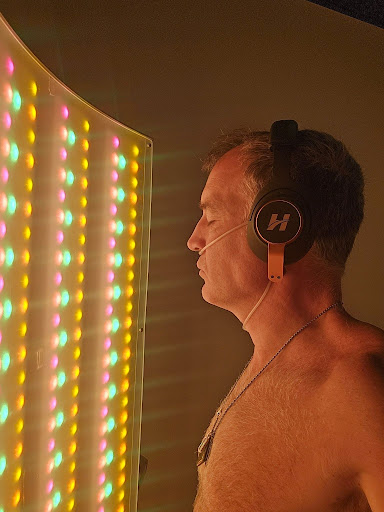
The fundamentals of health don’t stop mattering as we age. But they may no longer tell us everything we need to know. My approach is to build the foundations first, then use measurement, medicine and emerging longevity science intelligently to help preserve what aging is trying to take away.
The older I get, the less interested I am in the argument between “natural” health and advanced longevity medicine. I want both.
When we’re younger, sleeping well, exercising, eating properly and managing stress may give the body much of what it needs to recover and perform remarkably well. As we move through midlife and beyond, the equation begins to change. Aging is biology, not simply behavior.
Our bodies don’t repair, regenerate and adapt exactly as they did when we were younger. Maintaining muscle can become harder. Recovery can take longer. Immune function changes, as do aspects of mitochondrial function, cellular maintenance and regenerative capacity. Some of the systems that protected us almost invisibly when we were younger require more attention later in life.
That matters to the longevity conversation because I don’t believe telling a healthy 65-year-old to “just eat better, exercise and get more sleep” tells the whole story. Those things remain essential, but as we age there may also be risks, deficiencies or physiological changes that lifestyle alone cannot fully identify or address.
I’ve spent much of the past 15 years building businesses around health, behavior change and longevity, and I’m fascinated by what’s becoming possible through better diagnostics, medicine and emerging technologies. I’m interested in how everything from more sophisticated diagnostics and targeted supplementation to photobiomodulation, sauna, clinically appropriate hormone treatment and regenerative medicine might help us maintain function as we age.
But I also think we’ve sometimes got the order wrong. Longevity isn’t a choice between lifestyle and technology. Lifestyle is the foundation; science, medicine and technology can help us build on it.
An expensive regenerative procedure doesn’t make strength training irrelevant. Supplements don’t replace sleep. Recovery technology can’t compensate indefinitely for chronic stress, excessive alcohol or a sedentary life. And no peptide can manufacture meaningful friendships or give you a reason to get out of bed.
That’s why I keep coming back to six surprisingly ordinary things: nutrition, movement, sleep, stress, toxins and harmful exposures, and community and purpose. I think of them as my Six Pillars of Longevity. They aren’t the entire longevity toolbox. They’re the platform the rest of the toolbox sits on.
Particularly after 50, the more interesting question becomes: How do we get these foundations right—and then intelligently use science, medicine and technology to help preserve function as our biology changes?
I didn’t discover the six pillars in a longevity clinic
My version of this framework predates my involvement in what we now call the longevity industry. It began through my work at OffTheScale, a health and lifestyle-change company I was involved with more than a decade ago.
That experience taught me that information usually isn’t the hardest part of improving health. Most people broadly know what they should be doing. The harder problem is behavior change: how do you turn something you know you should do into something you actually do—and keep doing?
Over time, I began organizing my own health around a small number of areas I could understand and influence. They became a way of returning to the fundamentals whenever the latest health trend threatened to make everything unnecessarily complicated.
That thinking also influenced the businesses I built. In 2020, I co-founded Honest Plate around a similar question: how do you make living healthier not just desirable, but easier and better? Healthy eating often fails not because people don’t want to eat well, but because convenience wins. We tried to make fresh, healthy meals easier to access while also thinking about local sourcing, packaging and the wider system around food.
It reinforced a lesson I keep returning to: the healthy choice becomes much more powerful when it is also the easy choice.
By 2023, I had turned my six pillars into a simple health blueprint that I shared with my men’s group in Park City. It wasn’t a medical protocol. It was a way of asking: before worrying about everything happening to us, what are the major things we can actually influence ourselves?
Then, in early 2026, I completed Harvard Medical School’s Lifestyle and Wellness Coaching program and was struck by how familiar its underlying framework felt. The curriculum explicitly addresses the six pillars of lifestyle medicine, covering nutrition, physical activity, restorative sleep, stress management, positive social connection and avoidance of risky substances. It is a Harvard Medical School Executive Education program and provides a certificate of completion rather than professional coaching certification.
I hadn’t discovered some previously unknown secret to longevity. Quite the opposite. Years of working on behavior change, building health businesses and experimenting on myself had led me toward many of the same fundamentals.
The foundations of health aren’t particularly mysterious. The difficulty is living them.
As we age, the equation changes
We’re living through an extraordinary period in human health. We can continuously monitor glucose, sequence genomes, measure hundreds of biomarkers, image the body in remarkable detail and increasingly use AI to identify patterns that would previously have been difficult to see.
This becomes especially interesting as we move through midlife and beyond. The body can become less forgiving, and changes that aren’t immediately visible can begin to matter more. That’s why I don’t see lifestyle medicine and longevity medicine as competing philosophies. I see them as layers.
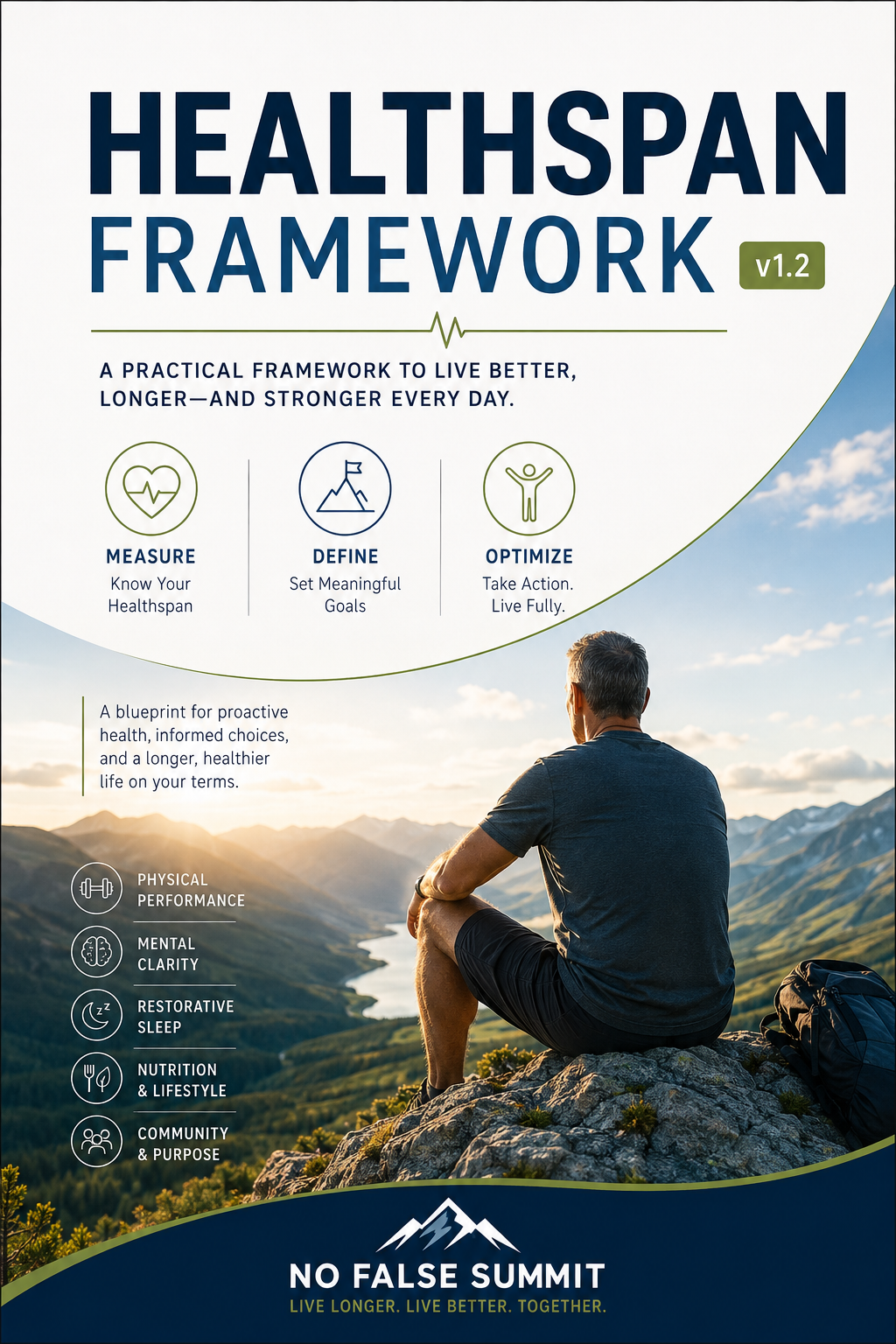
The framework I increasingly use for myself is Build. Measure. Correct. Optimize. Build the foundations. Measure what’s actually happening rather than relying solely on how you feel. Correct clinically meaningful deficiencies, risks or disease with appropriate professional care. Then optimize, using science and emerging technologies where the evidence, your circumstances and your goals justify going further.
The mistake isn’t wanting to optimize. It’s skipping the foundation while chasing the optimization.
And that foundation starts with six things.
1. Nutrition: Give the body what it needs
Nutrition may be the most confusing pillar because we’ve turned eating into tribal warfare. Keto, vegan, paleo, carnivore, Mediterranean, intermittent fasting, low fat, low carb: each camp can produce a compelling podcast explaining why the other camps are killing you.
I’m less interested in joining one of those tribes. My starting point is simpler: build most meals around nutrient-dense whole foods, eat plenty of plants and fiber, get adequate protein for your needs, and limit the ultra-processed foods that have come to dominate the modern diet.
A major 2024 BMJ umbrella review involving almost 9.9 million participants found higher exposure to ultra-processed foods was associated with numerous adverse health outcomes. Much of the evidence was observational and its strength varied by outcome, so association should not be confused with proof of causation. But the overall signal is difficult to ignore.
As we age, nutrition also becomes increasingly about preserving capacity. Maintaining muscle matters, which makes adequate nutrition and protein important alongside the physical stimulus of resistance exercise. Simply eating less in pursuit of a lower number on the scale isn’t necessarily the objective.
I also include something embarrassingly basic under nutrition: water. Hydration rarely gets the attention of the latest supplement stack, yet it is fundamental to normal physiological function. Before obsessing over the perfect supplement protocol, I’d start by asking what you’re actually eating and drinking every day.
Longevity starts at the kitchen table more often than it starts in a clinic.
2. Movement: Train for the life you want later
I deliberately call this pillar movement, rather than simply exercise. Exercise sounds like something you schedule. Movement is something your body was designed to do throughout the day.
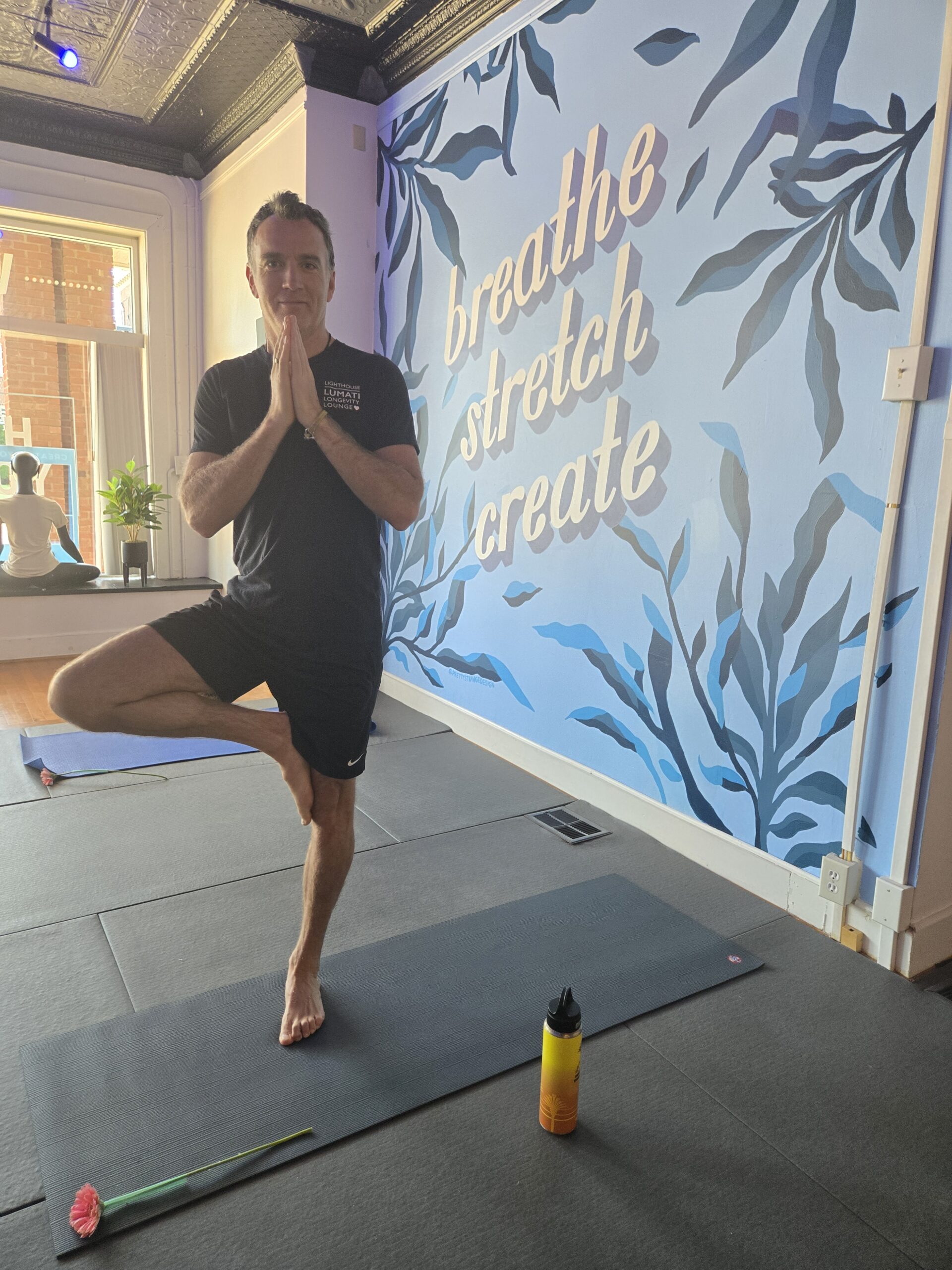
My practical framework has four parts: strength, cardiovascular intensity, walking, and mobility and balance. Strength helps preserve physical capacity. Cardiovascular work challenges our ability to produce and use energy under load. Walking gives us low-intensity movement we can accumulate throughout the day. Mobility and balance help preserve our ability to actually use the strength and fitness we’ve built.
This multidimensional approach is consistent with established physical-activity guidance. For older adults, WHO recommends regular aerobic activity and muscle-strengthening work, while specifically emphasizing multicomponent activity involving functional balance and strength to help preserve functional capacity and reduce falls.
But the real test for me isn’t what movement does to a biomarker tomorrow morning. It’s what it allows me to do decades from now.
I want to ski and play tennis on my 100th birthday.
That requires more than being alive. It requires strength, cardiovascular fitness, coordination, balance, mobility and enough energy to enjoy the day. So I increasingly ask a different question: what do I need to remain capable of at 70, 80 and 90 if I want a realistic shot at still doing those things at 100?
I’m not just training for this summer. I’m training for my final decades.
3. Sleep: The original recovery technology
The longevity world loves recovery technology, and so do I. Red light, sauna, cold exposure, compression, hyperbaric oxygen and wearables all interest me.
But there is a recovery technology humans have been using for a very long time: sleep.
We sometimes treat sleep as the thing we squeeze around the productive parts of life. I think that’s backwards. Sleep is part of the productive system. It influences physical recovery, cognition, emotional regulation and our ability to perform the following day.
It is also central to my Body as a Battery framework. If health creates our underlying capacity for energy, sleep is one of our most important forms of recharge.
You can spend enormous amounts trying to optimize recovery, but I’d still start by asking whether you’re giving your body enough opportunity to do what it already knows how to do. If you’re doing that and still aren’t sleeping or recovering well, that’s when measurement and appropriate clinical investigation become more interesting.
Foundation first doesn’t mean foundation only.
4. Stress: Not all load is visible
Stress is complicated because the goal isn’t zero stress. Training is stress. Learning is stress. Building a company is stress. Raising children can certainly be stress. Some stress helps us adapt. The problem is persistent load without sufficient recovery.
I’ve experienced periods in my entrepreneurial life when stress stopped being an abstract wellness concept. It showed up in my sleep, energy, decision-making, relationships and eventually my performance.
In my Body as a Battery model, I think about chronic stress as a form of resistance or impedance: energy that could otherwise be available for useful physical, cognitive or emotional performance gets consumed somewhere else. That’s my framework, not an established physiological measurement, but I find the metaphor useful.
Managing that load doesn’t necessarily mean meditation. It might mean walking, training, breathing, therapy, time outside, better boundaries, fixing a relationship or removing a source of stress you’ve tolerated for too long. Stress isn’t something we simply have to endure. It’s something we can learn to manage.
5. Toxins and harmful exposures: Reduce the unnecessary load
Established lifestyle medicine generally frames this pillar as avoidance of risky substances, beginning with obvious exposures such as tobacco, excessive alcohol and drug misuse. My definition is broader. I think we should also pay attention to the chemical environment surrounding modern life: substances entering our bodies through water, air, food, packaging and consumer products.
This is where nuance matters. The evidence isn’t equally strong for everything that gets labelled a “toxin.” For certain PFAS, evidence associating exposure with adverse health outcomes has become substantial. With emerging concerns such as microplastics, we know exposure is widespread but still have major unanswered questions about what different levels and types of exposure mean for long-term human health.
So I’m wary of turning toxins into another source of health anxiety. My approach is practical: don’t smoke, be thoughtful about alcohol, pay attention to air and water quality, and reduce avoidable chemical exposures where doing so is reasonable.
We live in the real world. The objective isn’t laboratory purity. It’s reducing unnecessary load.
6. Community & Purpose: The longevity technology we already have
This may be my favorite pillar because it doesn’t look like healthcare at all. Lifestyle medicine calls it positive social connection. I broaden mine to community and purpose, because being around other people isn’t necessarily the same thing as belonging, and belonging isn’t necessarily the same thing as feeling useful.
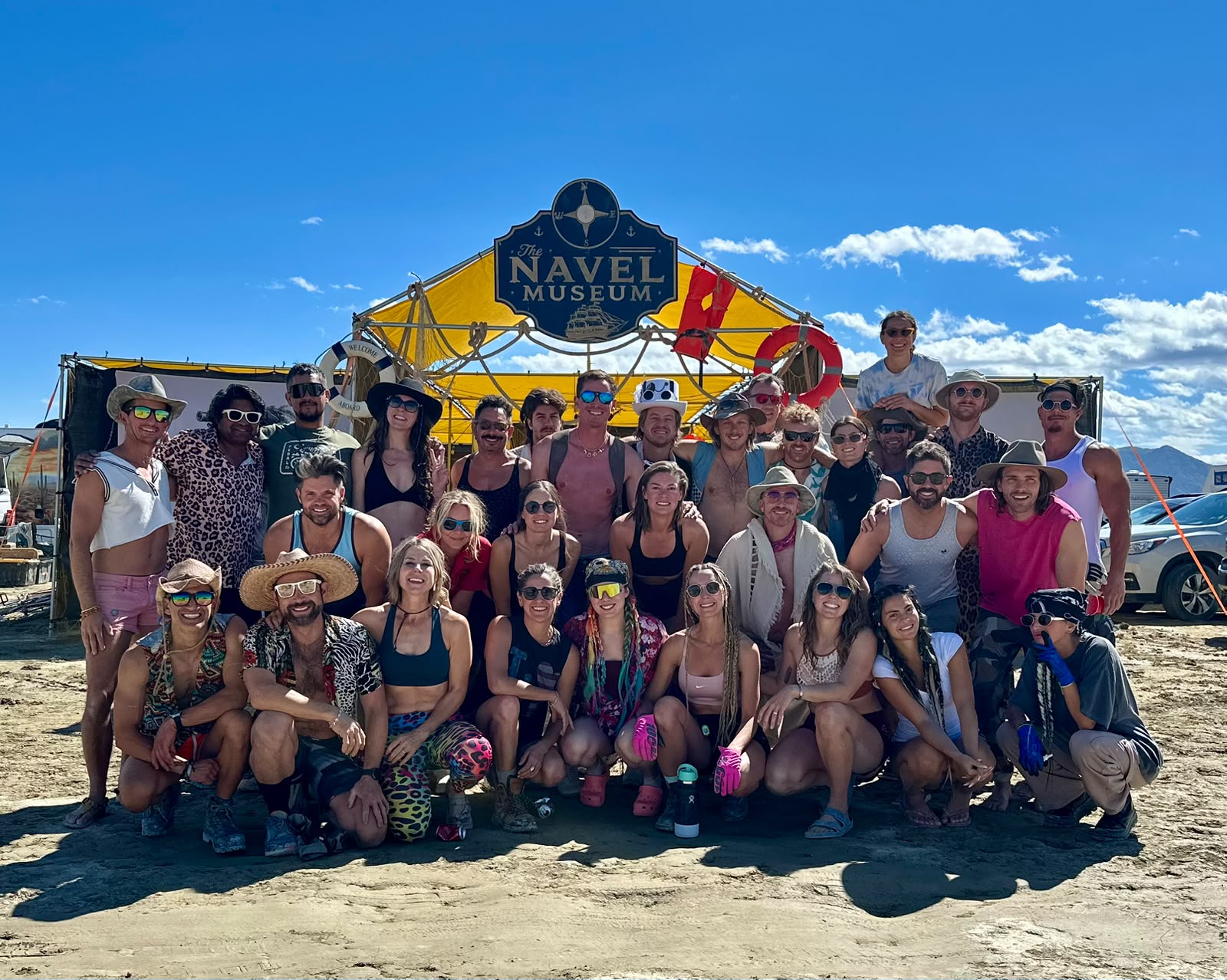
Building The Spur, creating men’s groups, raising children, living in Park City and now thinking about how communities can deliberately support healthier lives have all reinforced the same idea for me: humans need other humans. We need people who notice when we don’t show up. We need relationships that give rather than simply consume energy. We need opportunities to contribute and a reason to believe tomorrow matters.
The evidence increasingly supports treating social connection as a serious component of health rather than simply a lifestyle preference. Large prospective studies and meta-analyses have found social isolation and loneliness to be associated with higher mortality risk. Association isn’t causation, but the signal is difficult to dismiss.
It’s also one reason I’m so interested in Blue Zones and the wider question of how communities influence health. Their lessons aren’t simply about diet or exercise. The environment around people influences how they live. People move because movement is embedded into daily life. They interact because community is nearby. They have rituals, relationships and reasons to participate.
Health becomes less dependent on heroic individual discipline because healthier behaviors are woven into the environment. That connects directly back to what I learned from OffTheScale and Honest Plate: knowing the healthy choice isn’t enough; we have to make the healthy choice easier to live.
That’s one of the great opportunities I see in longevity—not just creating better treatments, but creating better defaults.
The invisible seventh pillar
Technically, there are six pillars, but there is an invisible seventh running through all of them: consistency.
One healthy meal won’t change your life. One workout won’t make you strong. One good night’s sleep won’t repair months of poor sleep, and having dinner with friends once a year doesn’t create community. Health is built through accumulation.
That’s why I think we sometimes misunderstand optimization. It sounds like finding the perfect intervention. Real health is often much less exciting: doing reasonably good things repeatedly for a very long time.
But consistency doesn’t make us immune to aging. You can do many things right and still develop disease. You can exercise and still lose muscle. You can eat well and still carry genetic risk. The six pillars improve the terrain; they don’t guarantee the outcome.
And that’s where modern longevity gets interesting.
What comes after the foundations?
For me, the next layer is Build, Measure, Correct, Optimize.
Building means getting the six foundations as strong as reasonably possible. They don’t have to be perfect, but they have to be real.
Then measure what’s actually happening. As we age, measures such as blood pressure, body composition, lipids, glucose regulation, cardiovascular fitness, strength and bone health, together with appropriate cancer screening and other age- and risk-dependent assessments, can reveal things that how we feel may not. More sophisticated measurements may have value too, but only when the information can meaningfully change what we do. The objective isn’t to collect the most biomarkers. It’s to find actionable information.
If measurement identifies disease, clinically significant risk or a meaningful deficiency, correct it appropriately. This is where longevity should work with medicine, not pretend to replace it. Sometimes the smartest longevity intervention isn’t futuristic at all. It might be treating hypertension, reducing cardiovascular risk, addressing sleep apnea, correcting a deficiency or following an evidence-based screening program.
Then comes optimization—the frontier that fascinates me. Can we preserve muscle more effectively? Improve recovery? Restore lost function? Identify deterioration earlier? Can regenerative medicine or other emerging technologies eventually help us preserve function or resilience that tends to decline with age?
Some interventions already have meaningful evidence in defined circumstances. Others remain experimental. Some of today’s longevity enthusiasm will undoubtedly turn out to be expensive noise. Our job isn’t to reject the frontier. It’s to approach it intelligently, considering evidence, risk, cost, personal goals and return on time.
Start with six numbers
Here’s an exercise I’ve used with groups I’ve spoken to. Look at the six pillars—nutrition, movement, sleep, stress, toxins and harmful exposures, and community and purpose—and give yourself an honest score from 1 to 10 on each.
Then ask which pillar, if you improved it by just one point over the next 90 days, would have the greatest impact on your life. Maybe you start walking after dinner or lifting weights twice a week. Maybe you drink less alcohol, protect more time for sleep, improve the food you keep at home or address the source of stress you’ve been pretending isn’t affecting you. Maybe you call the friend you’ve been meaning to call. Maybe you join something.
None of those actions is particularly impressive on a longevity conference stage. Repeated for twenty years, they might be.
And if you’re already doing the fundamentals well, particularly as you move through your 50s, 60s and beyond, don’t assume that’s where the conversation ends. Measure what’s changing. Understand your risks. Correct what needs correcting. Then stay intelligently curious about the science and technologies that may help preserve your capabilities for longer.
That’s not replacing the fundamentals. It’s building on them.
Longevity should create agency, not anxiety
Modern healthcare can make us feel surprisingly powerless. We worry about genetics, cancer, Alzheimer’s, cardiovascular disease and biomarkers we barely understand. Longevity can make that worse if it gives us an ever-growing list of things to measure, buy and fear.
I want it to do the opposite.
The six pillars remind me that while I cannot control everything that happens to my body, I’m not simply a passenger either. Every day gives me another opportunity to influence the trajectory through how I eat, move, sleep and recover; what I expose myself to; who I connect with; and whether I have something meaningful to do with the time I’m trying so hard to extend.
As I get older, I can add another layer. I can measure what’s changing, correct what needs correcting and intelligently explore where science might help me preserve capabilities that aging would otherwise begin to erode.
None of that guarantees I’ll ski or play tennis on my 100th birthday. Science can’t promise that, and neither can I. But that’s the goal, and I don’t intend to pursue it by choosing between the wisdom of lifestyle medicine and the possibilities of modern longevity science.
I want the best of both: get the foundations right, understand what’s changing, and then use science intelligently to help preserve what aging is trying to take away.
The future of longevity may be incredibly sophisticated. But the foundation remains surprisingly simple.
Sources & further reading
Harvard Medical School Executive Education, Lifestyle and Wellness Coaching — six pillars of lifestyle medicine and behavior-change curriculum.
World Health Organization, Guidelines on Physical Activity and Sedentary Behaviour — aerobic activity, strength, balance and functional movement recommendations, including guidance for older adults.
The BMJ (2024), umbrella review of ultra-processed-food exposure and adverse health outcomes involving nearly 9.9 million participants.
Health note: This article reflects my personal experience, framework and interpretation of published research. It is intended for general information and is not medical advice. Individual health risks and appropriate screening, treatment or interventions should be discussed with a qualified healthcare professional.