
What Whole30, kale, thirty raised hands and a small mountain of plastic taught me about designing healthy food around real life.
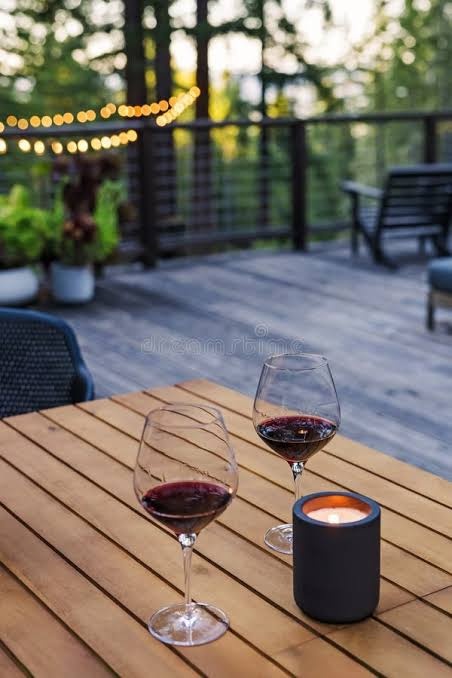
Diana and I had been saving the bottle for a month.
It was a Silver Oak, one of our favourite red wines, and had cost more than $100. We had saved it for the first evening after completing Whole30, the thirty-day nutrition programme Diana introduced me to in 2017. After a month without alcohol or added sugar, it felt like a suitably civilised reward.
We poured two glasses, toasted our achievement and each took a sip.
Then we almost spat it out.
The wine had not gone bad. It simply tasted extraordinarily sweet, as though somebody had added pudding to a perfectly respectable Cabernet.
I cannot tell you that our taste buds had literally reset. The science on whether reducing exposure to sweetness changes people’s preference for it is mixed. But my experience of sweetness had changed. A preference I assumed was permanent turned out to be negotiable.
The following January, kale made much the same point rather less expensively.
I had never been a fan. Kale seemed to be something people ate partly to demonstrate that they could. But during another Whole30, I began eating it regularly, importantly after massaging it with olive oil rather than treating it as leafy punishment. After a few weeks, I began to want it.
That was the first lesson behind Honest Plate: taste is not fixed. Repeated exposure can modestly increase our liking for vegetables. My body had not acquired the ability to issue nutritional instructions; I had discovered that a food I disliked could become something I craved when it was prepared well and became familiar.
The second lesson was rather less philosophical. Eating this way took an enormous amount of work.
A good idea with a preparation problem
Whole30 is a strict elimination programme. For thirty days, the original version removes added sugar, alcohol, grains, legumes and dairy, followed by a structured reintroduction. I would not prescribe it for everybody or call it a universal definition of healthy eating. For me, it was a controlled personal experiment.
It also made me spend a great deal of time in the kitchen.
For several Januaries in the Hamptons, I was effectively the household chef and prep cook. I planned meals, found compliant ingredients, chopped vegetables and cooked proteins so a busy week did not end with us ordering whatever required the fewest decisions.
I enjoyed cooking, but enjoyment is not the same as having time. By late 2019, The Spur, the coworking and members’ community I had founded, was expanding. I could not run the business and repeat my annual role as an unpaid short-order cook.
Necessity is often called the mother of invention. In my experience, she is more likely to arrive as a calendar problem.
I had recently become friends with chef Nick Reisini, who taught cooking classes at The Spur and understood both serious food and the less glamorous logistics required to put it on a table. I asked whether he would prepare our January meals.
He quickly agreed.
Then I did what people who run communities tend to do: I asked the room. At The Spur, I asked who else wanted help eating this way through January. Around thirty hands went up. We had not conducted market research or spent six months refining a pitch deck. We had found a shared problem and thirty people willing to pay for a solution.
Honest Plate went from conversation to execution in about fifteen days. On 1 January 2020, Nick began preparing the meals while I worked on everything around the kitchen that turns good food into a service. The business had been born, although it still looked rather like an unusually organised favour for friends.
The plastic problem hiding inside the healthy solution
There was one decision I was unusually stubborn about from the beginning.
During 2019, I had used various prepared-meal services. The food could be excellent, but every delivery arrived with a geological layer of disposable packaging. A week of healthy eating could leave the kitchen looking as though we had catered a small conference.
I could not make sense of building something intended to be healthier for the person while casually creating another problem for the planet.
So we used glass containers.
Glass was heavier, more expensive and breakable. It had to be returned, washed, sanitised and recirculated. Single-use plastic would have been considerably easier.
But I grew up in Britain with milk bottles appearing on the doorstep and empties going back out. It was an old loop that convenience culture had trained us to forget. If milkmen could manage it decades earlier, I thought we could summon the necessary technology in 2020.
The glass became an early test. Were we merely delivering food described as healthy, or were we willing to design the whole experience around health? The container, return system, food waste and ingredients were all part of the product. The intervention is rarely just the thing being sold. It is the system around it.
Thirty hands became more than one hundred families
The experiment did not end in January. People told friends and began ordering for their families. Within months, more than one hundred households had used the service. My preparation problem had become a real business.
We developed a plant-forward approach, with vegetable dishes at the centre and animal proteins added separately. Chef David Burke joined us on an elevated collection of organic dishes. For a brief period, it felt as though we had caught the market at precisely the right moment.
Then COVID arrived and changed the food economy around us almost overnight.
The pandemic created demand for delivery, but it also forced nearly every Hamptons restaurant to become a takeaway business. Many customers quite reasonably wanted to support places they had visited for years. Our category became more crowded just as sourcing, staffing and operations became harder.
Honest Plate continued, but the straight line towards expansion became less tidy. Around the same time, I moved to Park City more or less by accident. What I expected to be temporary became home. Honest Plate kept serving customers in the Hamptons, but distance and resources made the original vision harder to scale.
Entrepreneurial stories are often edited into a pleasing sequence: insight, launch, growth, triumph. The truth is usually closer to insight, improvisation, global event, relocation and several years wondering whether the idea still matters.
In this case, it did.
Six years later, we have found a way to bring Honest Plate to Park City while continuing to serve where it began. I understand its value differently now. Plenty of companies prepare healthy meals. The more interesting problem is how food fits into an actual household.
The family dinner problem
Family dinner is easy to romanticise. Everybody sits down together, cheerfully eats the same meal and shares amusing stories. Nobody has football practice, a late meeting, a food allergy or a sudden conviction that carbohydrates are a plot.
Real families live differently. Children have activities. Parents work irregular hours. One person is vegetarian, another wants more protein, somebody is gluten-free and somebody else avoids anything green. Planning one dinner can require the negotiation skills of a minor diplomat.
The predictable response is fragmentation. One person eats before leaving, another reheats something later, the children get a separate meal and the family table slowly becomes a piece of furniture rather than a shared ritual.
Systematic reviews find that more frequent family meals are associated with better diet quality in children and some measures of family functioning. Most evidence is observational, so one table does not automatically produce a healthier or happier family. But eating together appears to matter nutritionally and socially.
The question is not how to lecture families into having dinner together. It is how to remove some of the design problems making it difficult.
Honest Plate’s answer evolved into something closer to tapas than a conventional meal tray: a plant-forward core, with proteins and sides available separately. Different people can assemble different plates from the same dishes. Children can try something without the evening depending on whether they approve.
The food is prepared, but the family still creates the meal.
Convenience should not only make an individual transaction faster. Sometimes it should make a shared experience possible again.
Taste, time, table and trash
Looking back, Honest Plate was born from four forms of friction.
The first was taste. Healthy food is not useful if it feels like punishment. Preferences can evolve, but food must be prepared with enough pleasure that people return to it. Kale requires olive oil. Occasionally quite a lot.
The second was time. I knew what I wanted to eat. The problem was shopping, chopping, cooking and cleaning while expanding another business. A sensible health choice that requires hours somebody does not have is poorly designed.
The third was the table. A household is not one consumer but a small community with different bodies, tastes, schedules and beliefs about courgettes. The system must accommodate difference without producing several dinners.
The fourth was trash. A meal cannot be called healthy only by looking inside the container. Packaging is part of the design. Glass makes the operation harder, but the promise more honest.
Taste, time, table and trash are not a grand theory of nutrition. They remind me that behaviour is shaped by more than knowledge. The better option must be enjoyable, feasible, socially workable and consistent with the values it claims to serve.
Why do we give people good advice and then send them back into systems that make acting on it difficult? We tell families to eat whole foods, waste less and spend time together, then leave one exhausted person to solve the shopping, preparation, dietary differences and washing up.
That is not merely a failure of discipline. It is a design opportunity.
What necessity actually invented
I used to think Honest Plate began because I lacked time to prepare Whole30 meals. True, but incomplete. The wine and kale showed that preference could change. Thirty hands showed that my inconvenience was shared. The plastic showed that solving one health problem could create another. COVID showed that a good idea cannot choose its conditions. The family table showed that the real product was not a container of food. It was less friction around living better together.
Necessity may be the mother of invention, but inconvenience is often the person who makes the introduction.
The best businesses tend to begin there: not with a prediction about the future, but with a problem close enough to feel. The entrepreneur notices the workaround, asks whether others need it and designs a system that makes useful behaviour easier.
Honest Plate is still that experiment. It has taken longer and encountered more detours than we imagined during those frantic fifteen days. The need did not disappear. Families still want food that tastes good, aligns with their values and gives them a chance to sit together without turning dinner into another job.
The next opportunity in health may not be another instruction about what people should do. It may be designing the conditions that allow them to do it.
The Bigger Question
If we already know broadly what healthier eating looks like, how might we redesign taste, time, the family table and even the container so that eating that way becomes the easier part of ordinary life?
A note on evidence
This essay describes my personal experience, not proof that Whole30 resets taste or a recommendation that everybody follow it. The official programme removes added sugar, alcohol, grains, legumes and dairy for thirty days before reintroduction. Recent randomised research suggests that lower exposure to sweet-tasting foods does not necessarily reduce people’s liking for sweetness. Repeated exposure can modestly increase vegetable liking and intake, although long-term evidence is limited. Family meals are associated with better diet quality and some family outcomes, but much of that evidence is observational.
Sources and further reading:
Robson et al. (2020), Family Meal Frequency, Diet, and Family Functioning.
Whole30, Original Whole30 Program Rules.
Čad et al. (2025), The Sweet Tooth Trial.
Appleton et al. (2018), Repeated exposure and vegetable liking and intake.